Whole Home Generator Guide for a Custom Estate
Our whole home generator guide explains capacity, fuel, placement, transfer equipment, and design coordination for an estate built to endure when needed.
Eternity Builders · October 4, 2026
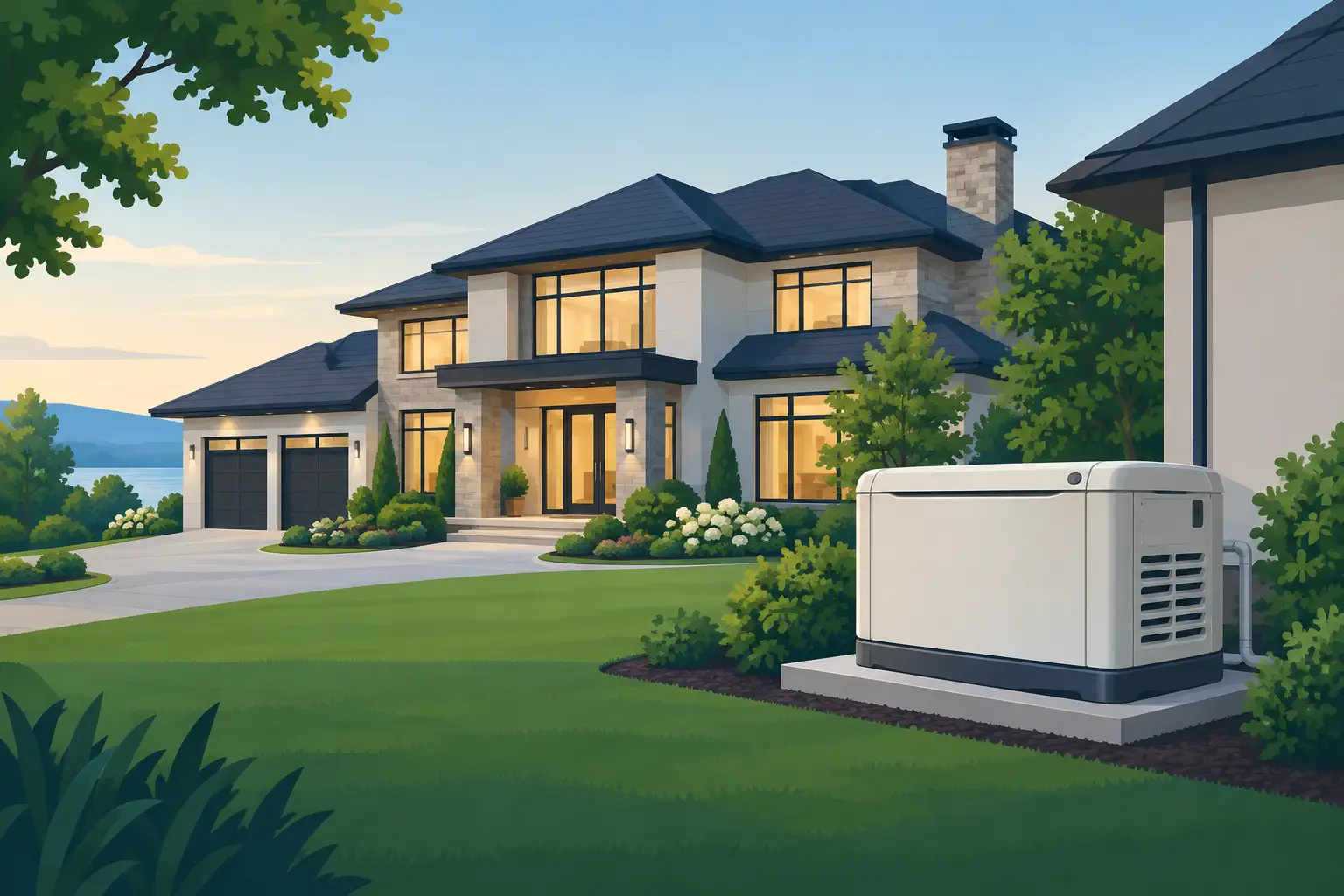
A power outage changes the character of a home quickly. Gates may not operate, well equipment can go quiet, refrigerated food becomes vulnerable, and a carefully planned residence loses much of its daily comfort. This whole home generator guide is intended for homeowners who want backup power treated as part of the residence's infrastructure, not as an afterthought placed beside the garage.
For an estate home, the central question is not simply whether a generator will run. It is what the home should continue to do when utility power is unavailable. The answer shapes equipment capacity, fuel planning, electrical design, placement, acoustics, and the way the system is integrated into the architecture and landscape.
Start With the Life You Want the Home to Maintain
A whole home generator can mean different things. One household may expect it to maintain refrigeration, essential lighting, internet, security, a few outlets, and one air-conditioning system. Another may want the residence to operate with little noticeable interruption, including multiple HVAC zones, pool equipment, a water feature, motorized shades, a wine room, workshop loads, elevators, and exterior systems.
Neither approach is inherently right. The more useful distinction is between essential-load backup and near-full-home backup. Essential-load systems are designed around selected circuits. They can reduce fuel use and generator size, but require clear decisions about what remains powered. Near-full-home systems support a broader portion of the electrical service and preserve more of the daily experience, though they require more capacity and thoughtful load management.
Begin with how the residence functions during a typical demanding day. Consider air conditioning, electric cooking, laundry, water heating, irrigation, pumps, refrigerated storage, office equipment, security, gate operators, and any detached structures. A guest casita, barn, pool house, or workshop may have its own priorities. This exercise is more revealing than a simple square-foot calculation because electrical demand is shaped by equipment and lifestyle, not just the size of the floor plan.
Capacity Is About Starting Loads, Not Just What Is On
Generator sizing should be based on a documented electrical load analysis prepared by qualified professionals. Major motors and compressors can draw substantially more power when starting than when running. Air-conditioning condensers, well pumps, booster pumps, refrigeration equipment, and some pool equipment deserve particular attention.
Modern homes also introduce loads that may be easy to overlook during early design. Induction ranges, electric vehicle chargers, heat-pump systems, sauna equipment, radiant floor heating, and high-output landscape lighting can each alter the calculation. A home may be comfortable with certain loads managed or temporarily shed during an outage. In other cases, the owners may prefer capacity that avoids those compromises.
Load-management equipment can be a sensible part of the plan. It allows the system to prioritize essential functions and delay lower-priority demand when the generator is approaching its limit. That can reduce the required generator size without leaving the home unlivable. The trade-off is intentionality: homeowners should understand which equipment may pause and under what circumstances.
Air conditioning often drives the conversation in the Texas Hill Country. If uninterrupted cooling across every zone is a requirement, the electrical design and generator capacity need to reflect it from the beginning. In some homes, soft-start controls on compatible HVAC equipment can reduce the surge associated with startup. They are a coordination item, not a substitute for proper sizing.
Choose Fuel With the Site in Mind
A standby generator needs a reliable fuel source for the duration of an outage. Natural gas, propane, and diesel are common options, each with practical implications for a custom residence.
Natural gas can be convenient where dependable service is available, as it avoids on-site fuel storage and refueling logistics. Its suitability still depends on confirming that available supply and pressure can support the generator's demand alongside other gas appliances. That verification belongs early in engineering and utility coordination.
Propane gives rural and estate properties a degree of independence from a gas utility connection. It requires a properly planned tank location, access for deliveries, and a clear understanding of how generator runtime affects stored fuel. A tank that comfortably supports fireplaces and cooking may not provide the desired duration for a large generator under sustained load.
Diesel is sometimes considered for its energy density and established role in certain backup applications. For a private residence, however, long-term fuel storage, maintenance, and refueling considerations need to be weighed carefully. The appropriate choice depends on site conditions, anticipated outage duration, other home systems, and the owner's preferences.
Fuel planning should account for more than the generator alone. If the home uses propane for cooking, fireplaces, water heating, or pool heating, the reserve strategy should consider those simultaneous demands. The goal is not simply to install a tank or connect a line. It is to understand how the entire property performs when normal utility conditions are interrupted.
Placement Should Protect Both Performance and Architecture
A generator is mechanical equipment, but its location affects the experience of the home. It needs adequate clearance, ventilation, service access, drainage, and a route for fuel and electrical connections. It also produces sound and heat. Those realities should be addressed before landscape walls, planting plans, and hardscape are finalized.
The best location is rarely the most obvious one. Placing a unit too close to bedroom suites, a covered outdoor kitchen, or a quiet courtyard can create an avoidable nuisance during the very moments when the generator is needed. Locating it far from the home may reduce sound exposure but can complicate trenching, voltage considerations, and service access.
On an estate site, placement should be reviewed alongside the home's arrival sequence, outdoor living areas, views, service circulation, and future additions. A screened equipment court can be effective when it is designed as part of the architecture rather than concealed with a few undersized shrubs after construction. Stone walls, planting, and gates should preserve the access a technician will need for routine service and eventual equipment replacement.
Exhaust direction deserves the same care. During an outage, windows may be open, families may gather on patios, and the home may be relying heavily on fresh-air systems. Equipment location should respect these conditions instead of treating them as a late-stage coordination issue.
The Transfer System Is the Decision Maker
The generator receives much of the attention, but the transfer equipment is what senses a utility outage and shifts the home safely to backup power. When power returns, it transfers the load back and allows the generator to cool down before stopping.
For a carefully designed residence, the electrical distribution strategy should be clear. Some homes use a dedicated emergency panel for selected loads. Others are organized around a service-rated automatic transfer switch and broader whole-house coverage. Larger or more complex residences may benefit from multiple distribution sections, load-control modules, or a design that treats detached structures separately.
This is also the point to discuss sensitive equipment. Security systems, network equipment, home automation, lighting controls, wine refrigeration, and audiovisual systems may respond differently to a transition than a simple receptacle circuit. Battery backup can bridge short interruptions for certain electronics, while generator backup sustains the property through a longer outage. These are complementary systems, not interchangeable ones.
Plan Generator Infrastructure During Design, Not After Move-In
Retrofitting a generator is possible, but it often reveals the value of early planning. Finished driveways may need to be crossed, landscaping disturbed, walls opened, and electrical rooms reworked. A custom build offers the opportunity to reserve the correct physical and electrical pathways before finishes make change more expensive and intrusive.
During preconstruction, the generator conversation should involve the electrical designer or electrician, HVAC team, fuel provider or gas professional, civil and site-planning team where applicable, landscape designer, and the people responsible for the home's automation and security. Coordination is especially valuable when the residence includes a well, septic components, large water-storage systems, gates, or several accessory buildings.
It is wise to designate a realistic equipment location, reserve conduit routes, provide space for transfer and load-management equipment, and plan the fuel connection with service access in mind. If the owner anticipates adding a pool house, workshop, solar and battery storage, or electric vehicles later, those possibilities should be documented now. A modest allowance for future infrastructure can preserve options without committing to unnecessary equipment on day one.
At Eternity Builders, concealed systems receive the same disciplined coordination as the stonework, millwork, and finish transitions visible at move-in. Backup power is a good example of why that matters: the strongest result is one that performs decisively without interrupting the composition of the home.
Test It Before the Weather Does
A standby generator is not a set-it-and-forget-it appliance. Automatic exercise cycles help keep the system ready, but they do not replace scheduled professional maintenance or periodic testing under meaningful load. Fuel supply, battery condition, filters, fluid levels, alarms, transfer operation, and control settings all deserve review according to the equipment manufacturer's requirements and the service provider's recommendations.
Homeowners should also know how to read the system's status indicators and whom to call if an alert appears. Keep service access clear, avoid storing materials around the unit, and revisit backup priorities as the household changes. A new electric vehicle, expanded guest quarters, or replacement HVAC equipment can alter the electrical picture.
The right generator plan is quiet in the best sense of the word. It does not call attention to itself in ordinary life, yet it preserves comfort, safety, and continuity when the property needs it most.