Luxury Spec Homes in the Texas Hill Country
Luxury spec homes in the Texas Hill Country offer a faster path to a lasting residence, when land, architecture, systems, and finishes are resolved well.
Eternity Builders · August 4, 2026
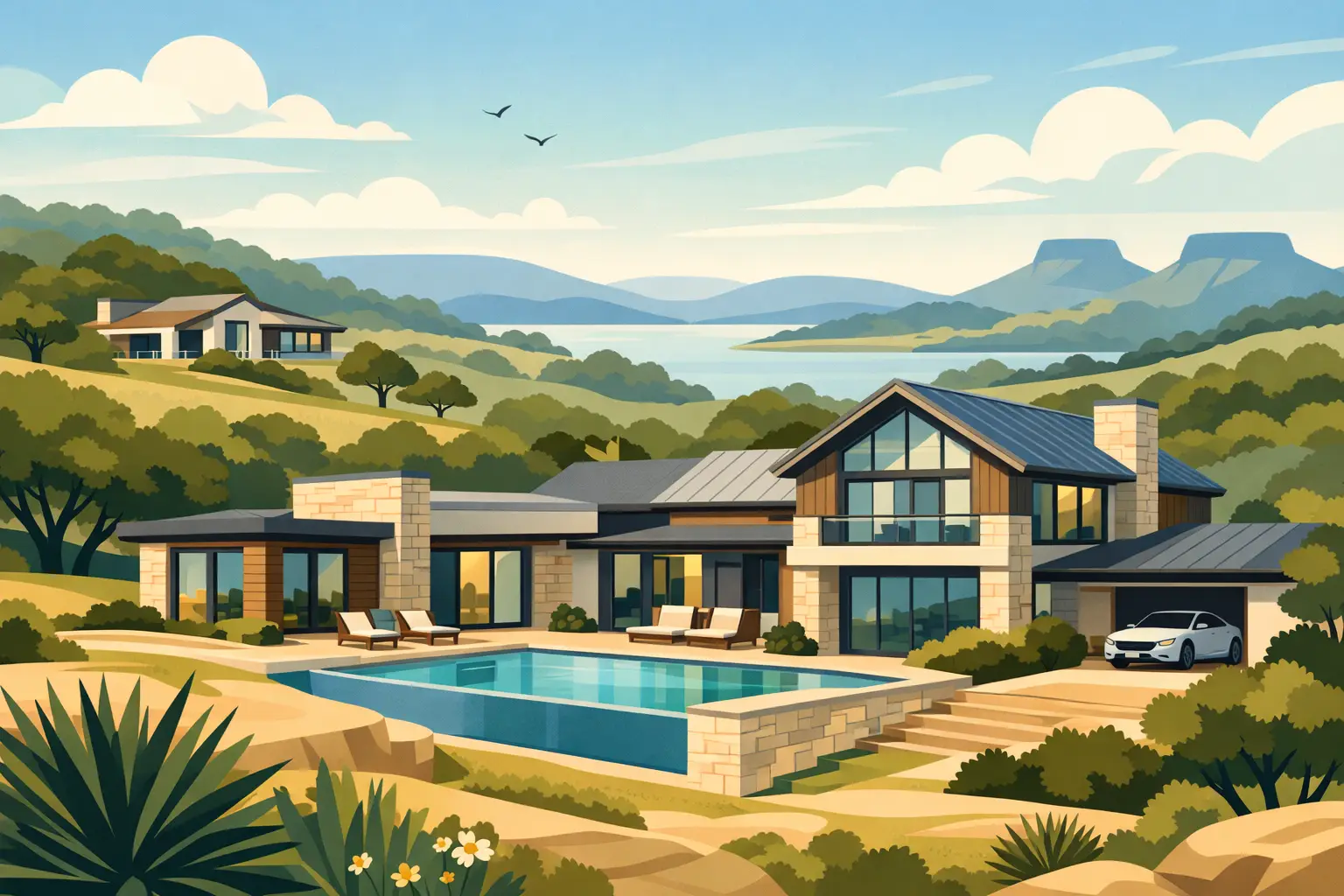
A finished residence can appear effortless on move-in day. The stone is set, the cabinetry aligns cleanly, the view is framed from the great room, and the pool terrace is ready for a family gathering. Yet the quality of luxury spec homes Texas Hill Country buyers encounter is determined long before the furnishings arrive. It is established in the decisions that are difficult to see: site planning, structural coordination, material selection, drainage, rooflines, mechanical systems, and the discipline to finish every transition properly.
For the right buyer, a luxury spec home offers a compelling alternative to a fully custom build. It can shorten the path to an estate-caliber residence while preserving the architectural presence, privacy, and finish quality expected of a long-term home. But not every spec residence is built to the same standard. The distinction lies in whether the home was conceived as a lasting place for a family or merely as a product intended to sell quickly.
What Defines Luxury Spec Homes in the Texas Hill Country
A luxury spec home is a residence built before its eventual owner is known. That definition is simple. The execution is not.
In the Texas Hill Country, a credible luxury spec residence should respond to the land as deliberately as a custom home would. A hillside site, mature oak canopy, long-range view, or constrained building envelope should inform the placement of the home, its approach, its outdoor rooms, and its orientation to sun and prevailing weather. A home that could be placed on any lot rarely feels rooted once complete.
The strongest homes also begin with a clear architectural point of view. That might mean a restrained limestone exterior with deeply proportioned openings, a contemporary composition with warm natural materials, or a more traditional Hill Country form refined through roof massing and interior volume. The style can vary. The discipline cannot. Exterior stonework, window placement, roof geometry, and interior ceiling relationships must work as one composition rather than a collection of upgrades.
This is where luxury has little to do with excess. A larger home is not automatically a better home. A well-resolved residence often feels more substantial because the scale of each room, circulation path, and outdoor connection has been considered before construction begins.
The Advantage of a Well-Planned Spec Residence
The obvious benefit is timing. A buyer may avoid the extended design and selection timeline associated with a fully custom project, especially when the residence is already well into construction or nearing completion. For families relocating to Boerne, San Antonio, or another Hill Country community, that can make a meaningful difference.
The better advantage is decision clarity. In a thoughtfully planned spec home, the builder has already coordinated the major architectural and technical decisions. The kitchen has been designed around its cabinetry and appliance layout. Lighting locations have been established in relation to ceiling details and furniture zones. The outdoor living area has been organized around the pool, views, shade, and access from the main living spaces. These decisions are strongest when they are made early, together, rather than adjusted in the field.
A completed or near-complete home also allows buyers to evaluate what drawings cannot fully convey. They can stand in the entry, assess the ceiling height, understand how the afternoon light reaches the terrace, and see whether the kitchen has the working rhythm their family needs. For a significant investment, that physical certainty has value.
There is a trade-off, of course. A spec home will not offer the same degree of personal authorship as a residence designed from the ground up around one family's exact routines. Buyers who require highly specialized spaces, a particular architectural language, or complete control of every finish may be better served by custom construction. The right spec home is for a buyer whose priorities align with the home's design intent, not for someone hoping to force a finished plan into a fundamentally different vision.
The Details That Separate Permanent From Presentable
Photography can show a dramatic great room or an impressive pool edge. It cannot reliably show the work behind the walls, the consistency of the reveals, or whether the house will remain comfortable and composed over time.
Start with the structure and envelope. Hill Country weather asks a great deal of a residence. Roof assemblies, flashing, drainage planes, window installation, insulation, and HVAC design deserve the same attention as the visible finishes. A beautiful exterior loses credibility quickly if water management, climate control, or building performance was treated as an afterthought.
Then look closely at the transitions. Are stone courses carefully laid around openings? Do cabinet panels, hardware, and appliance reveals align? Does tile terminate cleanly at corners and doorways? Are trim details proportioned to the room and carried consistently throughout the house? These are not minor preferences. They are the accumulated signals of construction management that respects both craftsmanship and the owner's investment.
Material sourcing also matters. Natural stone, plumbing fixtures, lighting, and hardware can vary widely in durability, finish quality, and availability. A builder with direct material relationships may have access to more distinctive options and a stronger cost basis than one relying solely on standard retail channels. That advantage only matters, however, when the materials are selected with restraint and installed with precision.
Evaluate the Builder, Not Just the Finish Schedule
When considering luxury spec homes in the Texas Hill Country, buyers should look beyond the published list of appliances, surfaces, and square footage. Those items matter, but they do not explain how the house was managed.
Ask who is accountable for construction coordination. In some projects, a developer, builder, architect, interior designer, and multiple subcontractors may each touch the process without one person maintaining full ownership of the final result. That arrangement can work, but it requires unusually clear communication. A home benefits when the general contractor is directly engaged in the day-to-day coordination of trades, schedules, corrections, and finish standards.
It is also reasonable to ask about the builder's process for quality control. How are site conditions reviewed before work proceeds? Who checks rough-in locations before drywall? How are changes documented? What happens when a finish does not meet the intended standard? A polished answer is less valuable than a clear, specific one.
Owner-led oversight can be especially meaningful in a spec residence because the eventual buyer was not present during the earliest decisions. The builder must act as a steward for someone they have not yet met, making choices that support longevity rather than convenience. At Eternity Builders, that responsibility extends from the home's exterior massing and structural planning to the final alignment of tile, trim, lighting, and cabinetry.
A Residence Should Fit the Land and the Life Ahead
The most successful Hill Country homes are not designed only for arrival. They are designed for ordinary Tuesday evenings, visiting grandchildren, holidays that grow louder over the years, and quiet mornings spent looking across the property. A spec residence should offer that same depth of consideration.
Consider how the home manages privacy without becoming isolated. A primary suite should feel separate from guest accommodations, while shared spaces should still invite connection. Outdoor living should be more than a covered slab with a grill. It should offer shade, circulation, views, and a reason to stay outside after dinner. Storage, mudroom function, pantry organization, and garage planning may receive less attention in marketing materials, yet they shape the ease of daily life.
Land itself should be treated as part of the home. On an estate site, the drive approach, retaining requirements, tree preservation, utilities, septic planning where applicable, and outdoor grading all influence the experience and the long-term cost of ownership. A residence can have exceptional interiors and still feel incomplete if its relationship to the property was never properly resolved.
When a Spec Home Is the Right Choice
A luxury spec home is often the right choice when a buyer values architectural quality but does not want to begin with a blank page. It suits families who can recognize a well-conceived plan, appreciate a finished material palette, and want confidence in what they are purchasing. It can also be an excellent fit when a desirable lot or community location is difficult to secure independently.
The key is to evaluate the home as a complete proposition: its site, design, concealed systems, construction management, finish execution, and readiness for the life you intend to live there. A home should not need a long list of explanations to justify its quality. Walk through it slowly. Open the doors. Study the lines where materials meet. Stand outside at the edge of the terrace and consider whether the residence feels settled into its land.
The right spec home will not feel like a compromise on permanence. It will feel like a carefully made setting where your family can begin making its own history.