What Causes Drywall Cracks in a New Home?
What causes drywall cracks? Understand settling, framing movement, humidity, and structural shifts - plus the signs that call for a closer look at your home.
Eternity Builders · November 21, 2026
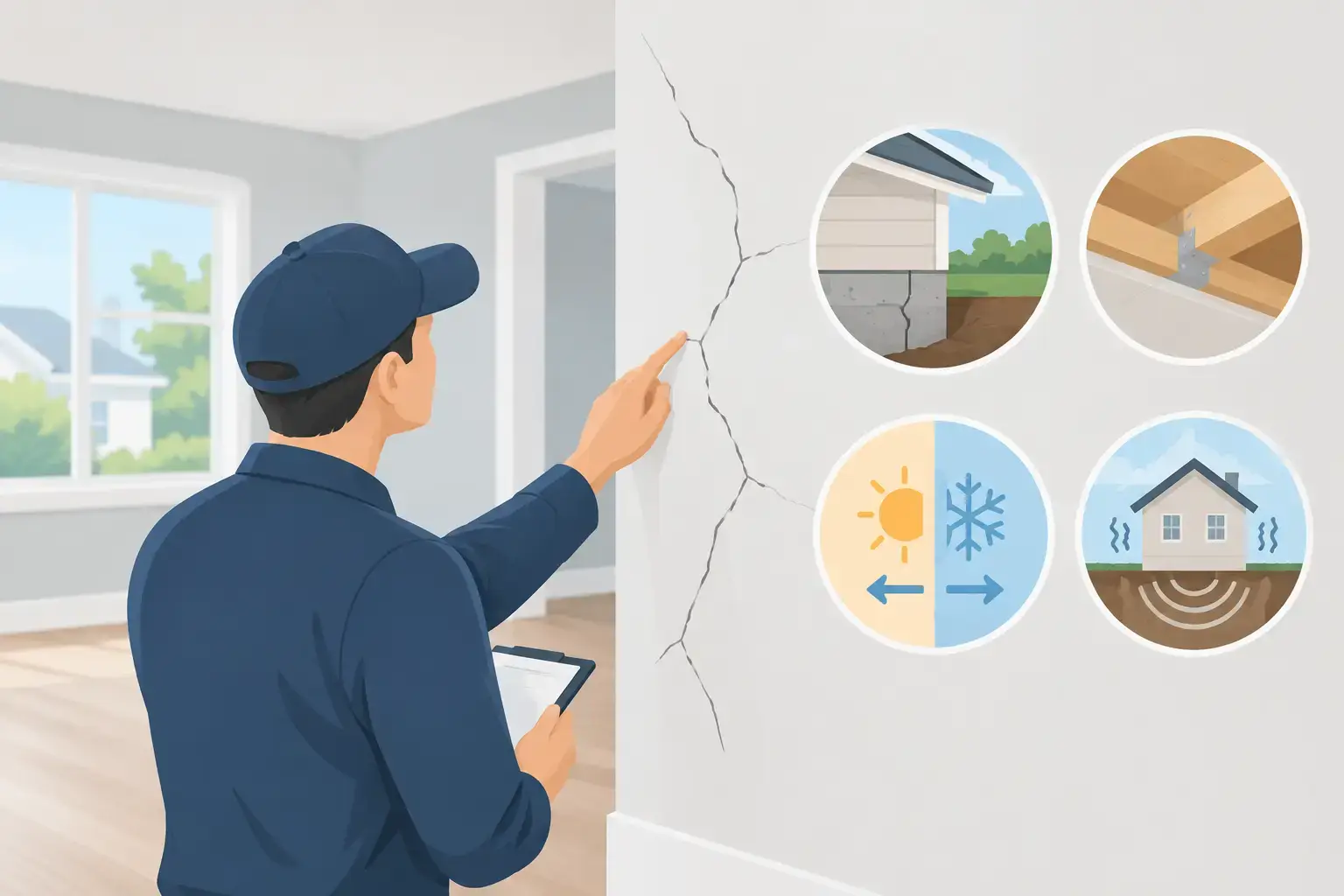
A hairline crack above a bedroom door or across a vaulted ceiling can be unsettling, particularly in a newly completed home where every reveal, paint line, and finish transition has been considered. So, what causes drywall cracks? Most are the visible result of normal movement in a house: framing dries, materials respond to changing moisture levels, and the building settles into its site. A smaller number point to conditions that deserve a more deliberate review.
The distinction matters. Treating every crack as cosmetic can overlook a developing issue. Treating every fine line as a structural warning can create needless concern. The right response begins with the crack's location, shape, timing, and whether it changes over time.
Why Drywall Cracks Appear
Drywall is a rigid finish installed over a structure made of materials that move. Wood framing expands and contracts with moisture. Trusses can shift slightly as attic temperatures change. Concrete foundations and soils respond to weather and load. Even carefully built homes experience minor movement as materials acclimate and the house begins its life in real conditions.
The drywall itself is not usually the original problem. It is often the first interior surface to reveal movement because taped joints and painted planes are continuous, smooth, and closely inspected. In a refined residence, a narrow line at a ceiling joint may be more noticeable than it would be in a less detailed space, but visibility alone does not determine seriousness.
Drying and settling in new construction
New homes commonly show minor drywall cracking during their first year or two. Framing lumber may retain moisture when it is installed, then dry gradually once the home is enclosed and conditioned. As boards shrink or adjust, joints can move enough to stress drywall tape or compound.
Settlement is another ordinary factor. A completed house places substantial and permanent loads on its foundation system and supporting soils. Small, anticipated adjustments can occur as those loads distribute. This does not automatically mean the foundation has failed. It does mean that the house is a connected system, and finishes may register minor movement while that system stabilizes.
In the Texas Hill Country, seasonal swings between heat, rain, and dry periods can make material movement more apparent. Site-specific soil conditions, drainage design, foundation engineering, and the timing of construction all influence how a residence responds. That is why a crack should be evaluated in context rather than judged by a photograph alone.
Humidity and temperature changes
Interior humidity has a meaningful effect on wood framing, trim, and drywall assemblies. A home that remains closed for long periods without consistent conditioning can experience larger swings in temperature and moisture. Conversely, a well-managed indoor environment helps materials remain closer to their intended equilibrium.
Attics are particularly relevant. Roof framing is exposed to much greater temperature variation than conditioned interior rooms. This can create movement at the transition between ceilings and interior partitions, especially near long spans, high ceilings, and complex roof geometry. Fine cracks where a wall meets a ceiling are often tied to this type of movement.
Framing movement and truss uplift
One common seasonal condition is truss uplift. During colder or drier periods, the upper portion of a roof truss can respond differently to moisture and temperature than the lower portion near ceiling insulation. The truss may lift slightly while interior walls remain comparatively stable, leaving a crack at the wall-to-ceiling connection.
This is usually a detailing and movement-management issue, not evidence that a roof is failing. Proper framing practices and drywall installation methods can reduce the likelihood or visual impact of these cracks. Still, some degree of seasonal expression is possible in a wood-framed home, particularly where ceiling planes are broad and uninterrupted.
Openings, corners, and long wall runs
Drywall cracks often form at predictable stress points: above doors and windows, at the corners of openings, where hallways meet larger rooms, and at transitions between walls and ceilings. These areas concentrate movement because framing changes direction or spans are interrupted.
A short diagonal crack extending from the upper corner of a door or window may result from ordinary movement around the opening. A recurring crack in the same place, especially one that lengthens, widens, or appears alongside doors that no longer operate correctly, deserves closer attention. The pattern is more informative than the fact that a crack exists.
What Causes Drywall Cracks That Need Investigation?
Most minor cracks can be repaired with appropriate preparation, joint compound, texture matching, and paint. The question becomes more serious when cracks are wide, repeated, or paired with other changes in the home.
Pay closer attention when a crack is wider than a typical hairline, visibly grows over a matter of months, or returns soon after a careful repair. Stair-step cracking in masonry or exterior finishes, gaps opening at baseboards or crown molding, sloping floors, and windows or doors that begin binding can add useful context. No single sign confirms a structural problem, but several signs together justify a professional assessment.
Water is another condition that should never be dismissed. Persistent moisture near a foundation, plumbing leaks within a wall, roof leaks, or drainage that directs water toward the residence can affect materials and soils in different ways. The appropriate professional depends on the suspected cause. A qualified builder may help document visible conditions and coordinate the next step, while an engineer, foundation specialist, roofing professional, or plumber may be needed to diagnose a specific concern.
It also matters whether the crack appeared after an event. Extended drought, significant rain, a plumbing leak, major renovation work, or the removal of a nearby tree can alter conditions around a home. Recording when the issue first appeared gives the evaluation a more useful starting point.
How to Read the Pattern Before Repairing It
Before filling and painting a crack, take clear, dated photographs from both close range and several feet back. Include a small ruler or measuring reference if the opening is noticeable. Then observe the crack for several weeks or through a seasonal change, unless there are urgent signs such as active water intrusion or rapidly changing movement.
A stable hairline crack at the joint between a wall and ceiling is often a finish-maintenance item. A diagonal crack radiating from an opening may require more attention, particularly if it is accompanied by misaligned trim or changes in door operation. Vertical cracks at drywall seams can result from joint movement, inadequate fastening, or normal material adjustment. Horizontal cracks can occur where framing and drywall move differently, though their location and extent matter greatly.
The repair itself should match the cause. Simply applying more paint will not correct a separated joint. A durable finish repair may require opening the affected area, securing loose drywall, retaping the seam, applying compound in thin layers, sanding with care, matching texture, priming, and repainting the plane for a consistent sheen. Where movement remains active, repairing the cosmetic finish before identifying the source can lead to repeat work.
Details That Help a Home Age Well
No construction method can promise that drywall will never show a crack. A home is assembled from different materials, each with its own response to moisture, temperature, load, and time. The goal is not an unrealistic absence of all movement. It is thoughtful planning, sound structure, controlled moisture, and finish detailing that accommodates normal behavior as gracefully as possible.
That work begins before drywall is installed. Drywall backing, fastening patterns, framing alignment, engineered connections, expansion considerations, conditioned-space planning, and transitions between materials all influence the finished surface. In a custom home, the value of this discipline is especially apparent in the rooms where large walls, tall ceilings, detailed millwork, stone, and carefully selected lighting place every surface under close view.
For homeowners, the practical standard is straightforward: monitor small changes, maintain consistent conditioning, address water promptly, and investigate patterns rather than reacting to a single fine line. A home built for family life over decades will require attentive care at times. Knowing when a drywall crack is ordinary maintenance and when it is asking for a closer look is part of protecting that long-term investment.