Natural Gas Versus Propane Homes Compared
Natural gas versus propane homes differ in fuel access, appliance performance, resilience, storage, and long-term planning. What matters in early design.
Eternity Builders · November 3, 2026
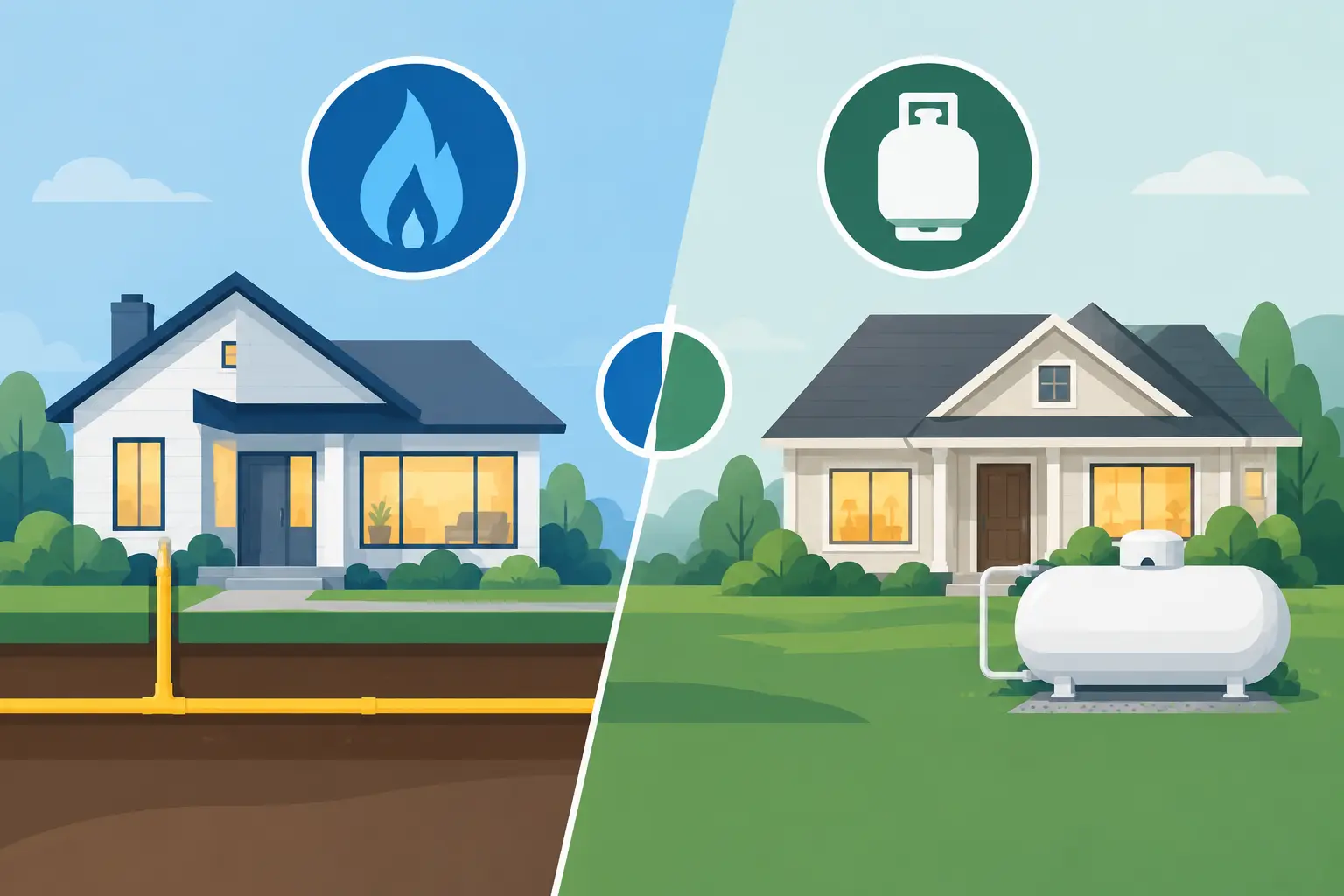
A beautiful range, a masonry fireplace, a heated pool, and a standby generator can all appear on a wish list long before the fuel strategy is settled. Yet natural gas versus propane homes is not a minor appliance decision. It affects the site plan, mechanical design, operating habits, exterior composition, and how comfortably the residence performs when the family and guests are all under one roof.
For a custom home, the better answer is rarely about which fuel is universally superior. It is about matching the home’s anticipated loads and the realities of its site with an energy plan that remains practical long after move-in.
Natural gas versus propane homes begins with access
Natural gas is delivered through a utility pipeline where service is available. The homeowner does not maintain an on-site fuel supply or schedule routine deliveries. For an estate property with natural gas at the site, that simplicity can be meaningful, particularly where the home will use gas for several major systems.
Propane is stored on the property in a tank and delivered by a fuel supplier. It gives a home access to a familiar gas flame and gas-fired equipment without a natural-gas connection. That flexibility makes propane a common consideration for private land and more remote settings, but it also introduces a physical component that deserves early attention: tank location, access for delivery, screening, and its relationship to drives, planting, views, and outdoor rooms.
Neither approach should be assumed based on the neighborhood or a nearby property. Availability, service options, the proposed house location, and the planned equipment package should be confirmed while the site plan is still open to adjustment.
The appliance experience is more alike than many expect
From the homeowner’s point of view, natural gas and propane can both support the gas appliances people tend to care about most: cooktops, ranges, fireplaces, outdoor kitchens, pool heaters, water heaters, dryers, and generators. The tactile appeal is familiar - immediate flame control at the range, a fire that does not require tending, and reliable high-output heat for certain applications.
The difference is in the equipment specification, not simply the fuel name on the plan. Propane contains more energy per gallon than natural gas, but the two fuels are measured and billed differently. A propane appliance must be configured for propane, and a natural-gas appliance must be configured for natural gas. They are not interchangeable without the appropriate manufacturer-approved conversion and installation work.
This is one reason equipment decisions should not be treated as finish selections. A range may influence the kitchen design, but it also contributes to the overall gas demand. The same is true of a fireplace, pool heater, and generator. A well-coordinated mechanical plan considers their combined peak use, rather than evaluating each appliance in isolation.
The kitchen should be a preference, not an assumption
Many serious cooks prefer gas because the flame is visible and responsive. Others choose induction for its speed, precise low-temperature control, cooler kitchen environment, and easier cleanup. A luxury kitchen can be excellent with either approach, or with a combination of induction cooking and gas service reserved for the fireplace, outdoor kitchen, or generator.
The useful question is not whether gas is more premium. It is how the household actually cooks, entertains, and uses the kitchen. A family that hosts large holiday meals may value a high-output range. A household that wants simple daily cleaning and minimal indoor combustion may place induction at the center of the kitchen. The design should support the routine, not a stereotype.
Compare ownership costs by the whole system
It is tempting to compare a utility bill with a propane delivery invoice and declare one fuel less expensive. That comparison is incomplete. Fuel prices change, usage varies by season, and a home’s envelope, equipment efficiency, thermostat settings, pool heating habits, and occupancy all influence consumption.
Natural gas often offers the convenience of recurring utility billing and no tank on the property. Propane requires fuel monitoring and deliveries, but it may be the viable route to gas-fired amenities on land without pipeline access. Tank ownership or leasing arrangements can also affect the economics and flexibility of propane service, so those terms deserve a clear review before a contract is signed.
Upfront scope matters as well. Extending service, creating space for tanks, installing gas piping, sizing equipment, and coordinating generator or pool-heater loads are all project-specific decisions. A disciplined budget should account for the complete fuel strategy rather than treating the appliance allowance as the whole cost.
Resilience depends on planning, not fuel alone
Homeowners often associate propane with resilience because fuel is stored on site. That can be an advantage when the tank is properly sized, kept supplied, and the equipment is designed around the intended use. But propane still depends on delivery access and thoughtful fuel management. A tank that is allowed to run low before a busy holiday weekend is not a resilience plan.
Natural gas avoids routine deliveries, but it is still a utility service. During a broader interruption, it may not be available. A standby generator also requires more than a fuel source. It needs careful load planning. A generator designed to support refrigeration, lighting, communications, essential cooling, and security may be very different from one intended to carry an entire large residence, pool equipment, and every comfort system simultaneously.
For either fuel, the most useful conversation starts with priorities. Decide what the home should do during an outage, how long it should reasonably sustain that function, and which systems are essential. That creates a better basis for equipment sizing than simply selecting the largest available generator.
Let the fuel plan shape the architecture discreetly
A propane tank is an exterior element, even when it is thoughtfully concealed. It should be considered alongside the arrival sequence, service drive, landscape layers, pool equipment, and primary views. Trying to find a place for it after the outdoor living areas and planting plan are finalized can create an avoidable compromise.
Natural gas has fewer visible site components, but its path into the home and its distribution to appliances still need coordination. Gas lines, vents, mechanical rooms, fireplaces, outdoor kitchens, and generator pads intersect with framing, stonework, cabinetry, ceilings, and finished outdoor spaces. Details that make a residence feel permanent are often invisible after completion, which is precisely why they merit attention before walls are closed.
In the Texas Hill Country, where homes may have broad sites, long drives, significant outdoor areas, and varied terrain, this coordination becomes especially valuable. The fuel decision should sit within the larger site and mechanical plan, not apart from it.
A practical way to make the decision
Begin with a complete list of intended gas loads: cooking, fireplaces, water heating, dryers, outdoor kitchens, pool or spa heating, and generator capacity. Then confirm which fuel sources are actually available to the site and what each would require physically. Finally, weigh how the family expects to live in the residence over the next decade, including entertaining, seasonal use, travel, and outage expectations.
For a home with accessible natural gas and several gas appliances, utility service may offer welcome simplicity. For a private estate site without it, propane can provide excellent performance when tank placement, delivery access, and fuel planning are handled deliberately. An all-electric or mixed-fuel plan may also be the better fit for some households.
The strongest decision is the one made early enough to be absorbed into the architecture with care. When fuel, equipment, site planning, and family routines are considered together, the home is free to feel effortless when it matters most.